Wakaf Al-Azhar
As a Nazhir officially registered with the Indonesian Waqf Board, Wakaf Al-Azhar manages all waqf funds, ensures every trust is channelled to its intended purpose, and accounts for its stewardship transparently.
Home/About Us
About UsEvery day, the sun shines on millions of mosque roofs across Indonesia. We believe that light need not simply come and go — it can become a source of energy that sustains the mosque and brings benefit that keeps flowing to the ummah.
Why should a mosque pay an electricity bill every month, when the sun shines on its roof without pause every day?
That simple question gave rise to NUUR+. More than 701,000 mosques and prayer houses are spread across Indonesia, and every roof receives the same sunlight. With the right technology and a spirit of working together, that light can become clean energy that helps mosques stand on their own while bringing wider benefit to the community.
NUUR comes from the word نُور meaning light, and stands for Nyala Umat Untuk Rahmat. The + marks benefit that keeps growing: energy is only the beginning.
Lighting 1 GW from the Rooftops of the Ummah.
We picture a future in which thousands of mosques and Islamic boarding schools across Indonesia are not only places of worship, but also producers of clean energy that benefits the environment and the communities around them.
One roof today. A thousand roofs tomorrow.
Bringing solar energy to mosques and Islamic boarding schools so electricity bills fall and operating funds can be redirected to needs that matter more.
Choosing locations by real need, managing funds transparently through a registered Nazhir, and opening the results for anyone to follow.
Returning the savings to the community through education, welfare, outreach, and social activity, while protecting the environment with clean energy.
NUUR+ was born from a collaboration between organisations experienced in waqf, renewable energy, philanthropy, and community empowerment.
As a Nazhir officially registered with the Indonesian Waqf Board, Wakaf Al-Azhar manages all waqf funds, ensures every trust is channelled to its intended purpose, and accounts for its stewardship transparently.
Wakaf Energi develops and runs the energy waqf programme on the ground, from planning and construction through to operating the solar energy systems for mosques and Islamic boarding schools.

A youth-driven non-profit widening access to renewable energy in Indonesia through education, collaboration, and practical action with communities. Sedekah Energi is its movement channel.

Muslims for Shared Action on Climate Impact connects Islamic philanthropy with climate action, so that more parties can contribute to lasting solutions.
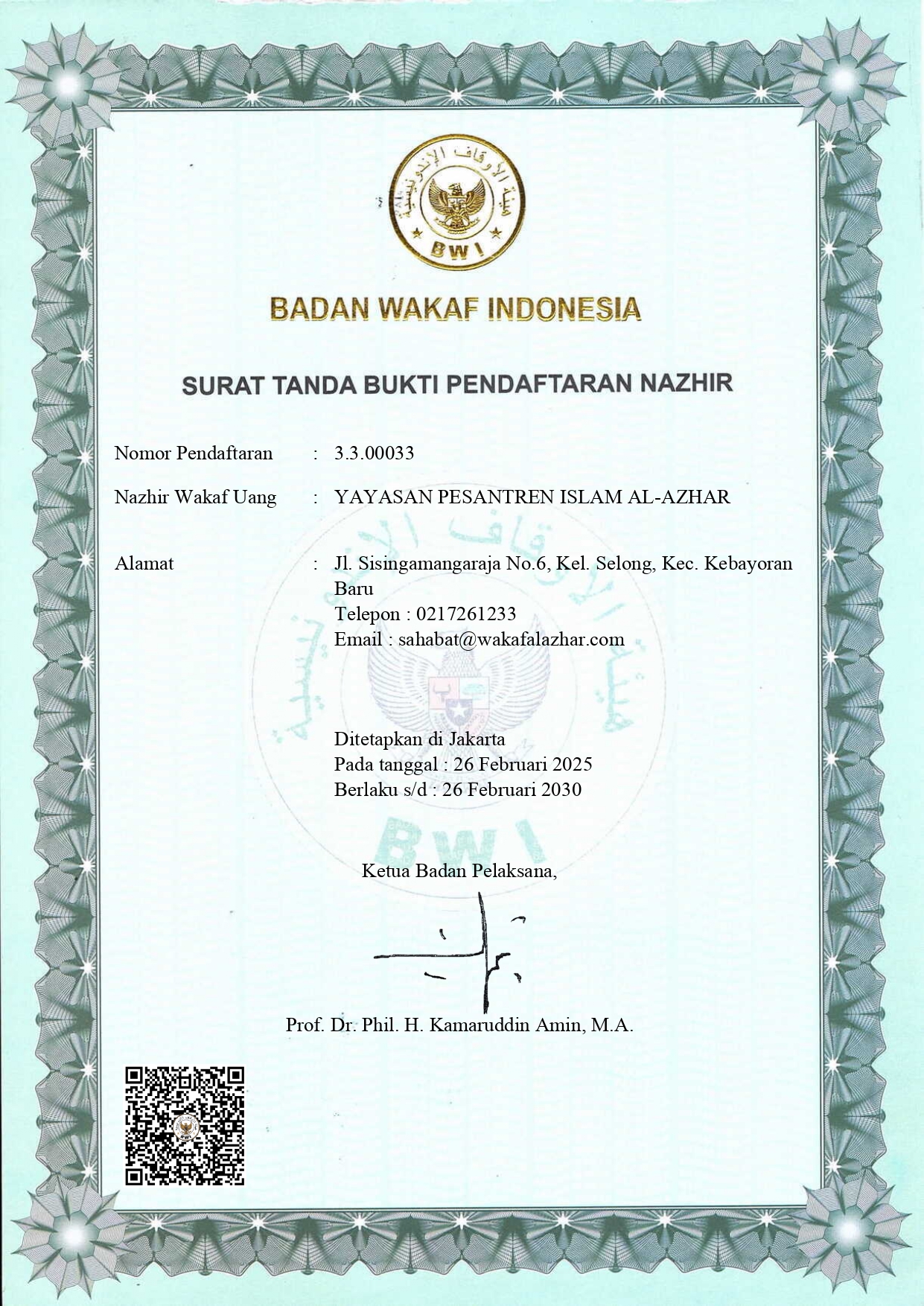
Waqf funds are managed by Wakaf Al-Azhar, a Nazhir officially registered with the Indonesian Waqf Board.
Registration number 3.3.00033, valid until 26 February 2030.
Every location shows the funds needed and how they will be used before fundraising begins.
Project progress is shared regularly, including when the schedule slips or problems arise in the field.
Once a project is complete, the report on fund use and energy output is available to the public.
Every figure, assumption, and impact claim comes with its source and a methodology that can be checked.
The questions we are asked most, with the figures and their sources.
NUUR+ is a joint campaign by four organisations — Wakaf Al-Azhar, Wakaf Energi, Sedekah Energi, and MOSAIC — bringing clean energy to mosques, Islamic boarding schools, and community enterprises through productive waqf.
NUUR+ is a movement, not an institution. It holds no bank account of its own and does not hold funds.
NUUR comes from the word نُور meaning light. The + marks benefit that keeps growing — energy is only the beginning. It stands for: Nyala Umat Untuk Rahmat.
A donation is spent once. Waqf preserves the asset and keeps its benefit flowing. A solar panel installed today will still produce electricity decades from now, and every month the savings go back to the congregation for that whole time.
No amount is too small. A site is built by many hands, not by one large donor. See the amounts and how it works.
You will be told. Project progress is shared regularly, including when the schedule slips or problems arise in the field. We would rather report the real situation than present figures that look better.
It is already running. Two mosques in South Jakarta — At-Taqwa and Nurul Yaqin — are operating with a combined capacity of 13.68 kWp and have produced 23,766 kWh of electricity recorded on the meter.
That figure is read straight from the meter on site, not calculated from a projection. The charts are open, per location.
Every site is connected to a monitoring system that records energy production automatically, in real time. Production and consumption charts for each mosque are open to the public, complete with the reading window.
If there is a gap in the readings, the chart shows that gap — it is not bridged to look smooth.
No. From the data of the two operating mosques, solar panels cover about 32–50% of electricity needs, not all of it. At night the panels produce nothing, so supply is drawn from the PLN grid.
That is why the system uses a hybrid configuration. What falls is most of the daytime bill, and it keeps falling for as long as the panels keep working.
Propose the location. Mosque committees, Islamic boarding schools, cooperatives, and village enterprises can register for a survey. The team assesses the potential benefit, technical feasibility, and readiness to proceed. The application form is here.
Yes. The programme can be tailored, from supporting a single site in full to co-funding several projects. Funds are still managed through a registered Nazhir, with reporting ready to be accounted for. Propose a collaboration here.
Spreading the word lights it too. You can introduce this movement to your mosque or community, contribute your skills, connect us with the right people, or join as a technical partner. The ways in are on the contact page.
Electricity production figures are read from the Wakaf Energi monitoring system. The share of demand covered by solar is calculated from measured production against the consumption recorded on the bills. The Nazhir registration number comes from the Indonesian Waqf Board.
If your question is not answered here, send it to us. We would rather answer it than have you keep it.